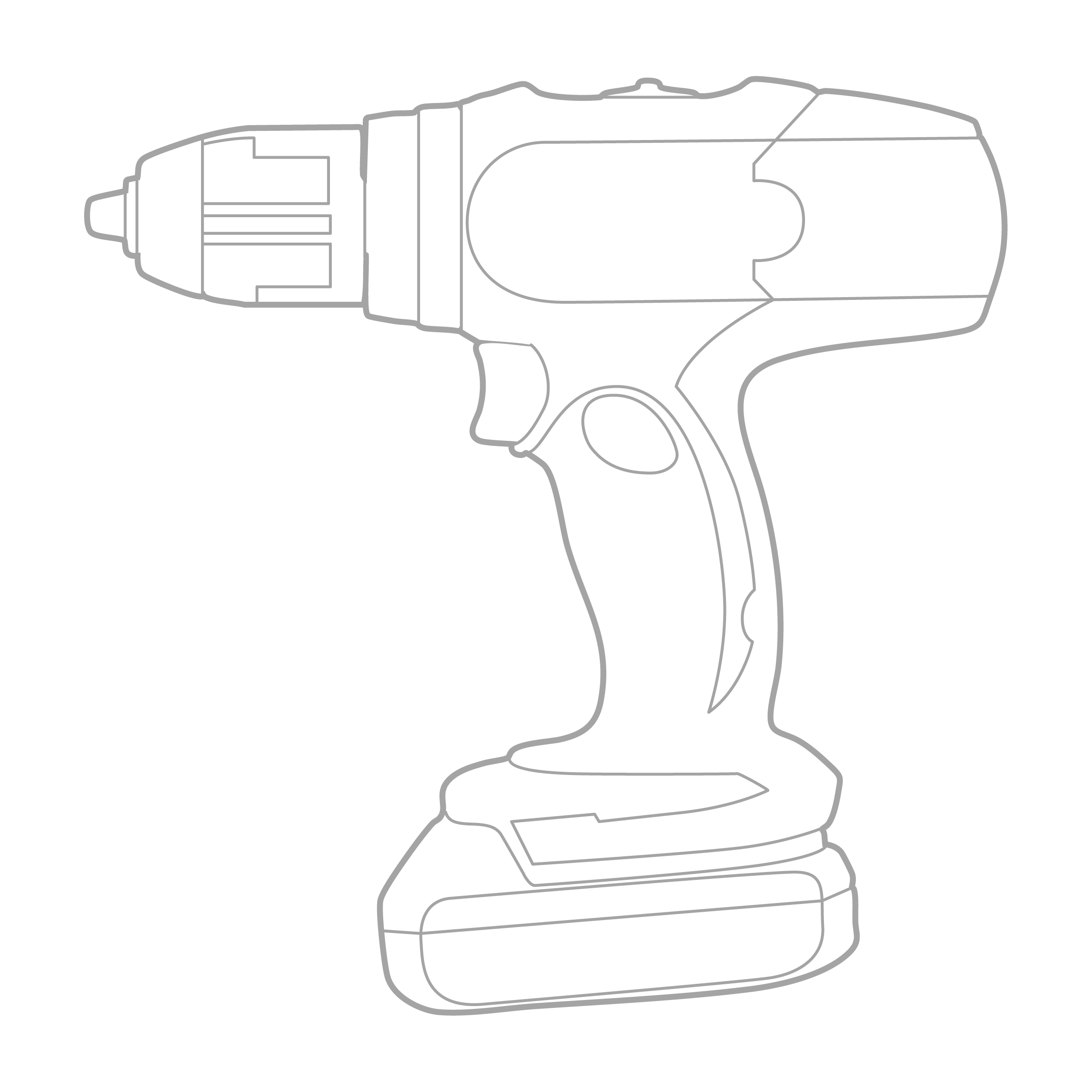
Hiring equipment reduces the need for new manufacturing, saving energy, raw materials, pollution and waste. It’s a simple way to lower your environmental impact and support a more sustainable, shared-use model.
For example, consider the environmental impact of a single cordless drill:
Carbon Footprint
Battery Manufacturing
Global average: ~17.6 kg CO₂e per kg of lithium-ion battery (cradle-to-gate) (arXiv).
Approximate battery mass in a drill: ~0.5 kg → ~9 kg CO₂e per battery.
Material Extraction
Lithium mining: ~15 kg CO₂ per kg of lithium; if a battery contains, say, 0.2 kg Li, that adds ~3 kg CO₂ (PatentPC, Earth.Org).
Cobalt refining: 8–15 kg CO₂ per kg; if battery has ~0.1 kg Co, that’s ~1–1.5 kg CO₂ (PatentPC).
Nickel refining: 3–7 kg CO₂ per kg; assuming ~0.1 kg Ni → ~0.3–0.7 kg CO₂ (PatentPC).
Total extraction emissions: approximately 5–5.5 kg CO₂.
Drill Manufacturing (beyond battery)
Manufacturing plastics, metals, and electronics also adds emissions. Though exact figures vary, let’s conservatively estimate 10–20 kg CO₂.
Estimated total per cordless drill:
Battery production: ~9 kg
Extraction: ~5 kg
Assembly & other materials: ~15 kg → ~29 kg CO₂e per unit.
Air Pollution
Mining contributes 4–7% of global greenhouse gas emissions, much from fossil-fuel-powered machinery (Wikipedia).
Lithium brine evaporation releases pollutants like sulfur dioxide into the atmosphere (Wikipedia).
Regions like Chile’s Salar de Atacama see up to 65% of regional water used for lithium mining, stressing ecosystems and local communities (TIME, Wikipedia).
Chemical leaks (e.g., hydrochloric acid from brine pools) have caused fish kills and contaminated water sources (WIRED, Wikipedia).
Cobalt and nickel mining also lead to water contamination and habitat degradation (NenPower, IER, Greenly).
Plastic Waste & Non-Recyclable Materials
Most drills use plastic housings and components that are difficult to recycle.
Battery recycling rates are extremely low, often cited at ~5% globally, meaning most end up in landfills (Wikipedia).
Landfilled lithium batteries leak heavy metals (e.g., chromium, cobalt, nickel) and can ignite fires that release toxic fumes (IER, Wikipedia).
Summary Table
Impact Category
Rough Estimate per Cordless Drill
Carbon Emissions
~29 kg CO₂e
Air Pollution
Local SO₂ and heavy metals from mining & refining
Water Use
~950 liters for 0.5kg of lithium
Water Pollution
Acid leaks, heavy metal contamination
Plastic & E-waste
Significant; low recycling rate for batteries (~5%) and plastic parts
Final Thoughts
While the overall carbon footprint of a cordless drill (estimated ~29 kg CO₂e) is modest compared to larger electronics, the environmental damage from mining – especially water stress, chemical pollution, and ecosystem degradation – is disproportionately high.